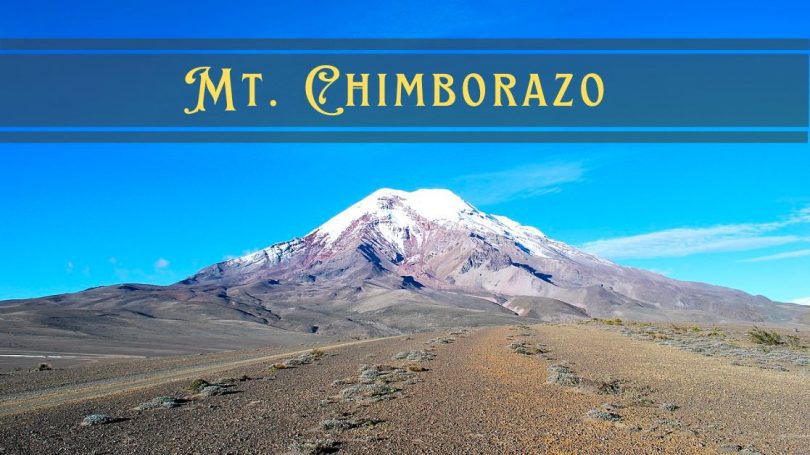
Mount Chimborazo is Ecuador’s highest peak, and the Chimborazo climb is non-technical, which means you climb up without confronting steep vertical cliffs that demand technical abilities such as ice climbing. Climbing to Chimborazo is considered one of the best things to do in Ecuador.
Mount Chimborazo’s equatorial peak (6,268.2 m/20,565 ft) is also the closest point on Earth to the sun. It is the tallest peak on the world as measured from the center of the earth rather than sea level.
Climbing Chimborazo takes place between midnight and dawn. with many successful summit attempts reaching either the minor Veintimilla 6,230 m (20,440 ft) peak or the major Cumbre Maxima peak around daybreak. Taking ChlorOxygen supplements while climbing Chimborazo may potentially alleviate symptoms of altitude sickness.
Table of Contents
Where is Chimborazo Located?
Chimborazo Volcano, situated in the high Andes of Ecuador, South America, is approximately 235 kilometers south of the capital city, Quito. The closest city to Chimborazo is Riobamba, nestled in Chimborazo Province.
Enveloped by the Chimborazo Wildlife Reserve, the volcano is surrounded by this protected expanse of land, spanning nearly 60,000 hectares. Herds of wild vicuñas roam freely within this sanctuary, lending an enchanting presence to the area.
Vicuñas are like smaller, adorable cousins of llamas and alpacas. These captivating creatures boast remarkably soft and lightweight wool, often regarded as even finer than cashmere.
How to Get To Chimborazo
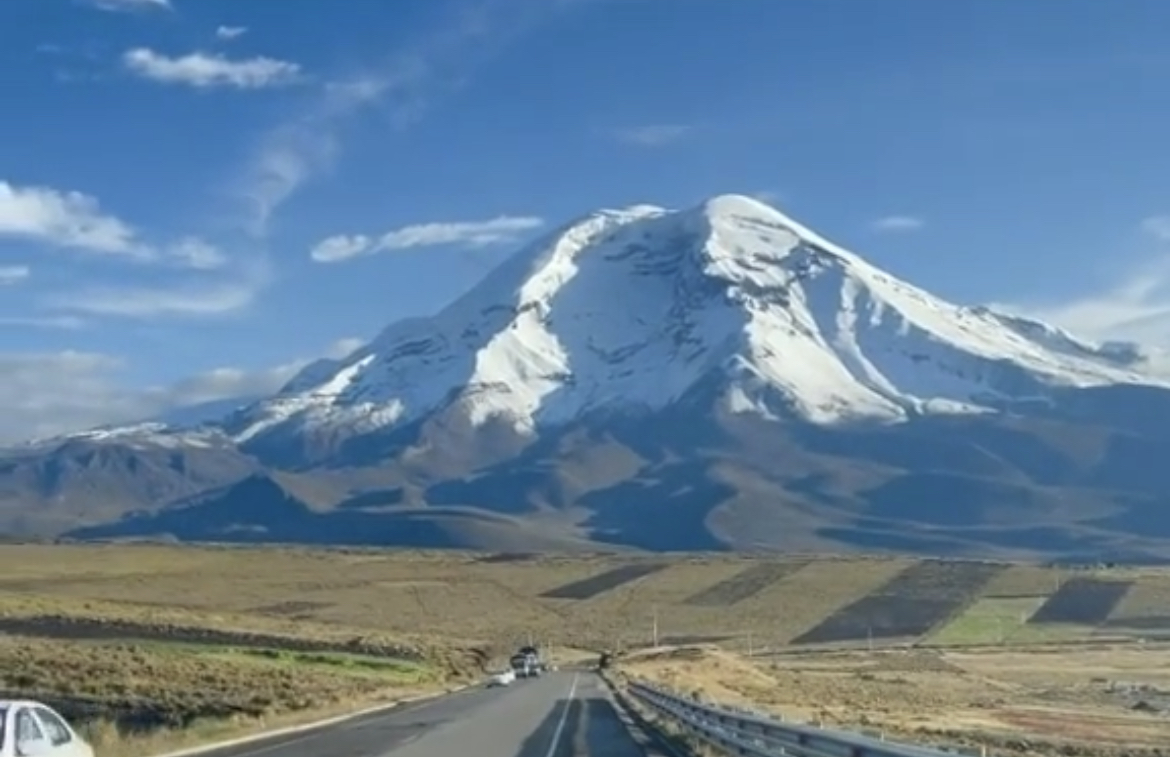
Take any of the southbound buses from Quito’s Quitumbe terminal to Riobamba. It will cost you roughly $3.75 – and the trip will take longer than three hours.
Then, take one of the buses to Guaranda from the Terminal Terrestre de Riobamba and ask the driver to drop you off at the Chimborazo entry. It is around 30 minutes after traveling through San Juan town.
You may also alternatively take a taxi cab to the trailhead, which is about a half-hour drive from the Whymper Hut.
How High is Chimborazo?
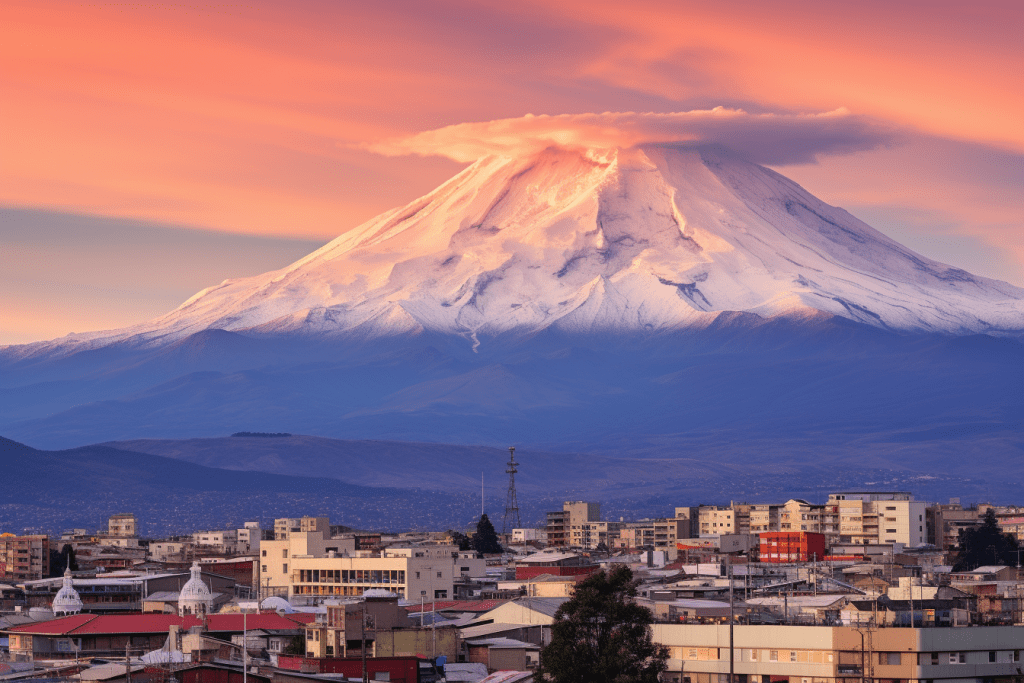
Chimborazo, a massive ice-capped stratovolcano, draws attention at a stunning elevation of 6,310 meters or 20,703 feet. Its most recent reported eruption occurred in 550 AD, marking a significant historical event.
Chimborazo commands a gigantic presence in the terrain, with a circumference of 78 miles and a diameter of 30 miles. While Chimborazo was once thought to be an extinct volcano, current studies have revealed surprising data indicating that it is still an active force of nature.
Is Chimborazo Really the Highest Peak in the World?
When considering scientific factors, yes, Chimborazo is taller than Everest. When measured from sea level, Mount Everest, towering at 8,848 meters, surpasses Chimborazo’s height of 6,268 meters. In fact, Chimborazo doesn’t even rank among the top 100 highest mountains in the world.
When scientific concepts are considered, a genuinely amazing distinction emerges. Because of the Earth’s oblate structure, where the equatorial area is slightly bigger and thicker than the poles, Chimborazo’s top becomes the farthest point from the center of the Earth.
Situated approximately one degree south of the Equator, compared to Everest’s position at 27.6 degrees north, Chimborazo’s peak resides at a greater distance from the Earth’s center than any other location on the planet. If we delve into the numerical details, Everest is 6,382.3 km above the center, while Chimborazo surpasses it at 6,384.4 km.
This intriguing discovery, made in 2012, gains further fascination when considering that Chimborazo isn’t even the tallest mountain in the Andes, ranking only 37th in height.
Best Time To Visit Chimborazo
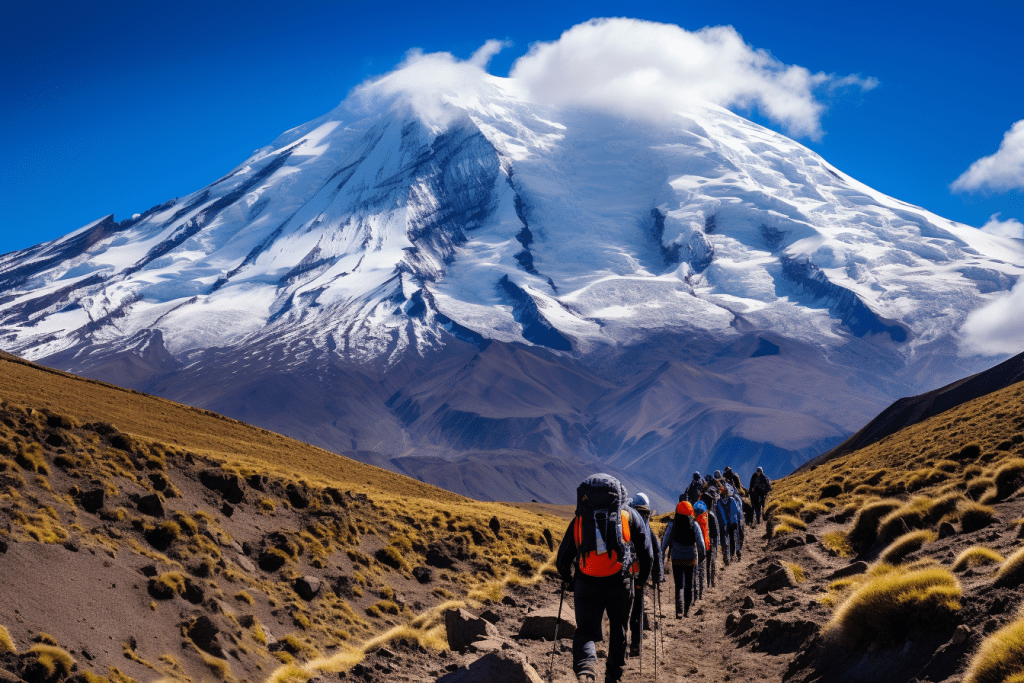
The best months to climb Chimborazo are June and July, as well as December through early January. From February to May, bad weather is prevalent, especially around April.
During this period, which aligns with Ecuador’s summer, the Andean weather tends to be favorable, with generally sunny and pleasant conditions. Daytime temperatures often reach around 23 degrees Celsius (73 degrees Fahrenheit), providing a comfortable environment for outdoor activities.
However, it’s important to note that temperatures drop significantly at night, typically around 7 or 8 degrees Celsius (45-46 degrees Fahrenheit).
The temperatures gradually decrease as you ascend higher altitude towards Chimborazo and approach its towering peak. Regardless of the season, it is common to encounter strong, cold winds accompanied by icy temperatures in the mountain’s upper reaches. This weather pattern is a notable characteristic of Chimborazo and persists throughout the year.
Make it a point to start your climb before midnight and to return by 10 a.m. for the following reasons:
- First, there are risks of rockfall. Around that time, the route around The Castle, a massive rock wall about an hour from the Refugio Whymper, becomes treacherous. As the temperature rises, a great number of tiny and large rocks begin to fall from the high wall.
- Later in the afternoon, passing across this region (El Corredor) is like dashing between falling rocks.
- Second, clouds frequently roll in early in the afternoon, making it extremely difficult to find the route. Because there are large crevasses on both sides of the regular trail, losing track may be quite perilous.
Starting Point
Riobamba serves as the perfect starting point for an expedition to Chimborazo. Located approximately 120 miles (200 km) from Ecuador’s capital, Quito, Riobamba provides convenient access to the Chimborazo Reserve.
To reach Riobamba from Quito, you can take a bus from the Quitumbe bus station, located slightly south of the capital. Once in Riobamba, reaching the Chimborazo Reserve is relatively straightforward.
You have the option of boarding one of the buses bound for Guaranda and requesting to be dropped off at the entrance of the Reserve. Alternatively, you can opt for a taxi ride from Riobamba, typically costing around $35.
Furthermore, if you prefer a hassle-free experience, many guides and tour operators offer comprehensive programs, including transportation to Chimborazo. When making arrangements with them, you can discuss the details of pick-up and transportation logistics.
Chimborazo Routes
There are several routes available to climb Chimborazo. Among the more accessible options are the North Side via Las Murallas Rojas, the North Side via El Castillo (the most popular route), and the Original Route, which was first conquered in 1880. These routes are classified as grade 2 on the UIAA scale.
It’s important to note that climbing Chimborazo requires more than your average volcano hike. It is essential to possess proper climbing techniques, which can be acquired through some training and preparation.
These routes typically take 8 to 9 hours to ascend, providing a demanding but achievable endeavor. The Original Route involves a climb of approximately 4,300 feet, while the other two routes encompass a total ascent of 3,900 feet.
Reaching the summit of Chimborazo is a remarkable feat that demands technical skill and experience. The West Face, in particular, presents a challenging ascent classified as a WI4, indicating the need to navigate ice walls. This aspect of the climb adds a thrilling and awe-inspiring dimension but also requires a profound understanding of proper climbing techniques.
Equipped with ice picks and crampons, climbers must navigate near-vertical sections, some reaching heights of up to 30 feet. The high altitude further compounds the difficulty of this ascent, requiring endurance and acclimatization.
For those seeking an even more exhilarating and demanding endeavor, the Arista del Sol route might be the ultimate choice. This route, classified as a grade 5, represents the most challenging route tackled on Chimborazo thus far.
The journey begins with a section comprising 65% pure rock climbing, testing the climber’s technical skills and problem-solving abilities. Navigating this route usually takes around two days, adding an element of endurance and strategic planning to the climb.
Reaching the summit of Chimborazo via these technical routes is a testament to a climber’s expertise, determination, and passion for mountaineering. The experience of conquering ice walls, maneuvering through challenging rock formations, and enduring the demanding terrain is an extraordinary adventure.
Best Time to Climb Chimborazo
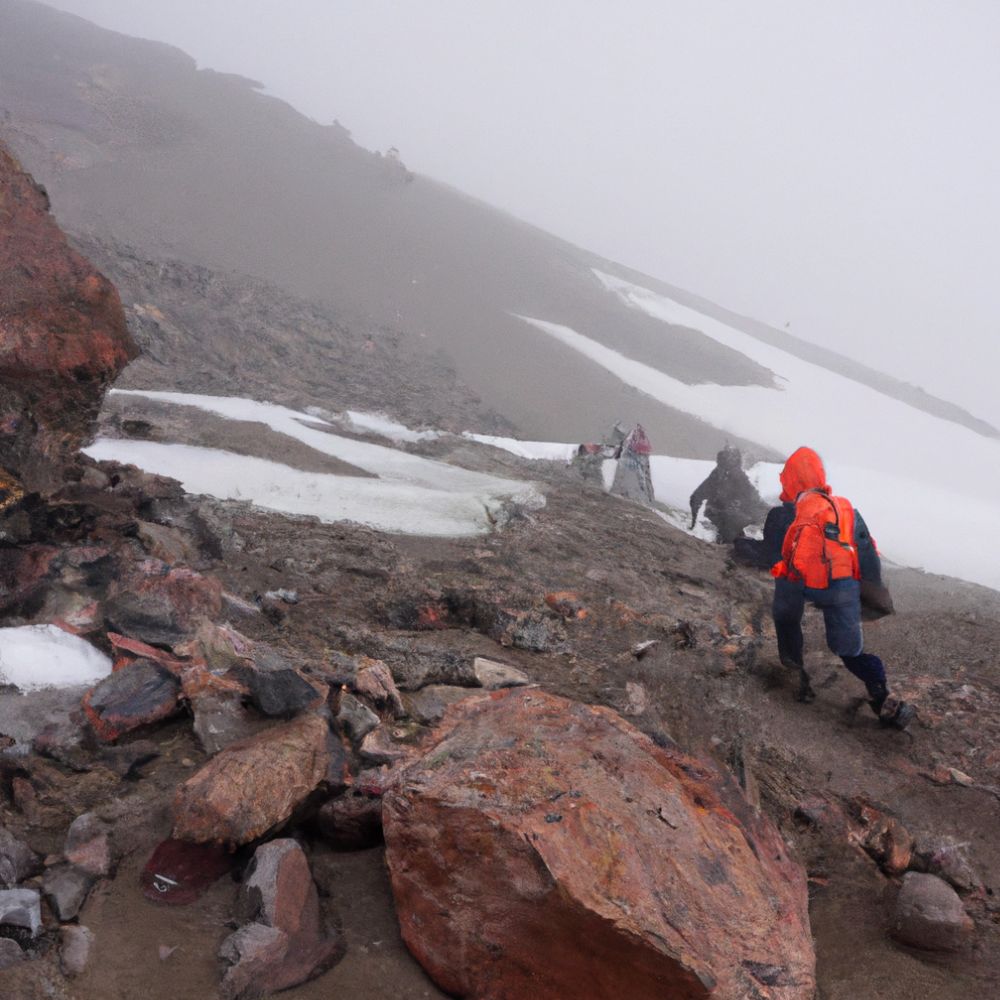
The best months to climb Chimborazo are June and July, as well as December through early January. From February to May, bad weather is prevalent, especially around April.
Make it a point to start your climb before midnight and to return by 10 a.m. for the following reasons:
First, there are risks of rockfall. Around that time, the route around The Castle, a massive rock wall about an hour from the Refugio Whymper, becomes treacherous. As the temperature rises, a great number of tiny and large rocks begin to fall from the high wall.
Later in the afternoon, passing across this region (El Corredor) is like dashing between falling rocks.
Second, clouds frequently roll in early in the afternoon, making it extremely difficult to find the route. Because there are large crevasses on both sides of the regular trail, losing track may be quite perilous.
Chimborazo Acclimatization and Climbing Preparation
Climbers are recommended to spend time at high altitude before making a Chimborazo summit attempt to learn how their bodies would respond when on the mountain’s side. I would also recommend taking ChlorOxygen 1-2 weeks ahead of the trip so it’s easier to deal with high altitudes.
Difficult hikes in Ecuador’s central Andes, such as El Altar’s lagoons or the Ecuadorian Inca Trail in Sangay National Park, are excellent methods to train your body to adjust to high altitude.
Things to Bring to Your Chimborazo Climb
The Chimborazo climb is not for beginners, so make sure you have the proper equipment to complete the trip and survive the cold temperatures you will encounter along the journey, which range between -3°C and -15°C.
While most tour operators provide their own climbing equipment, it is still recommended to bring your essentials such as:
- Medium backpack for the ascent
- Refillable water bottle
- Sunscreen with a high SPF (50 SPF or higher)
- Lip balm
- Clothing: thermal underwear, hiking socks, t-shirt, waterproof jacket, and pants
- Sunglasses
- Personal hygiene items
- Face mask
- Alcohol-based disinfectant
Camping in Chimborazo
Most groups start their ascent from the Whymper refuge (5,000 m / 16,400 ft.). It has four dozen bunk beds, fresh new mattresses, toilets, cold water, basic food supplies, stencils, a gas stove, and a fireplace.
The same amenities and prices are available in the Carrel refuge (4,800 m / 15,744 ft.). With 52 beds, this sanctuary is totally open. However, your ascent will have to begin 1 hour earlier.
Camping is also permitted everywhere on the mountain, and some groups set up a high camp to shorten the summit push to two days, which I believe boosts your chances of reaching the summit. The most highly recommended are:
El Castillo High Camp
El Castillo high camp is located in the bottom of a bowl, a few meters beyond the rock outcrop and on the left (north) side of the Southwest ridge (the normal route). It’s not a good idea if there’s new snow on the first dome. This camp is vulnerable to the windblast of avalanches coming from above.
Moraine Camp
Moraine camp at 5,050 m, 10 minutes from Whymper refuge. This region has a large flat field. Make your camp as far away from the moraines and the Thielman glacier as possible.
Note: As of November 2021, refuges no longer provide service or accommodation and all climbs will begin from a high camp at 5,200 meters.
Altitude and Safety Tips
Climbers will be exposed to tremendous altitude throughout the volcano, which will be difficult for everyone. Altitude sickness is always a risk that must be taken carefully.
Taking Chlorophyll supplements while climbing Chimborazo may potentially alleviate symptoms of altitude sickness.
It is usual and expected that a climber may experience shortness of breath, a high pulse rate, and weariness when trekking. However, whenever symptoms such as chest discomfort, crippling headaches, and coughing up fluid appear, it may be time to wrap up the day. It is important to understand your body and prioritize your safety.
Make sure to acclimatize first before climbing Chimborazo to avoid altitude sickness. This climb are not for beginner climbers as it can be dangerous.
If you already know that you are prone to altitude sickness, bring necessary medications together with your first aid kit or better yet, do not try doing strenuous activities.
Accredited guides are required before you can climb the mountain. While they are trained to keep climbers safe, you know yourself better so think carefully before deciding to climb Ecuador’s highest peak.
Conclusion
While Chimborazo may not hold the title of the highest mountain in terms of elevation, its unique position on Earth grants it a remarkable distinction. The realization that Chimborazo’s summit is the farthest point from the center of the Earth instills a sense of wonder and fascination.
Climbing Chimborazo offers a range of experiences, from more accessible routes that require proper climbing techniques to technical ascents demanding advanced skills and experience.
Adventure-seeking individuals will definitely enjoy trekking or climbing the Chimborazo.
If you are up for some adrenaline-pumping activities, consider adding this destination to your itinerary.